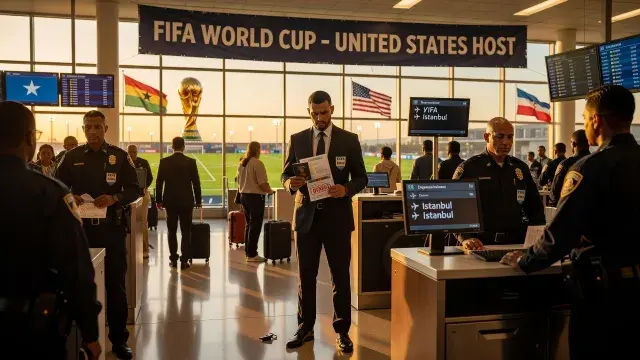
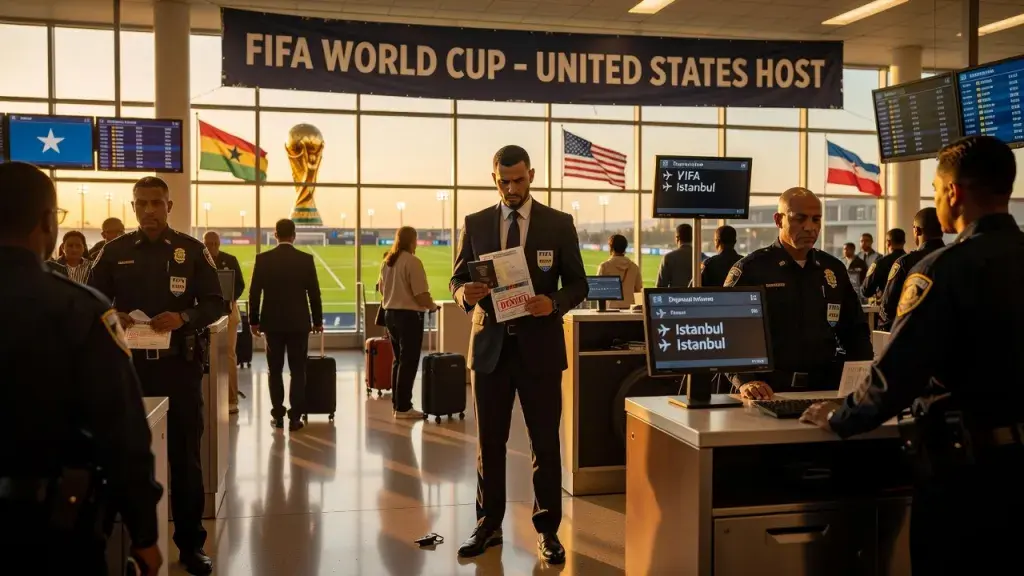
Omar Abdulkadir Artan, one of Africa's most decorated football referees and a FIFA-selected official for this summer's World Cup, has been refused entry into the United States despite holding a valid American visa and travelling on a diplomatic passport. The incident, reported by AFP, has sent shockwaves through the global football community just days before the tournament is set to begin. Artan has since returned to Istanbul, where he had been based ahead of his scheduled duties.
The circumstances of the refusal remain officially unexplained by US border authorities, and neither FIFA nor the US Department of Homeland Security had issued a formal public statement at the time of writing. Artan's case has drawn comparisons to broader conversations about travel restrictions and their intersection with international sport - a tension that, across disciplines from athletics to winter sports like skeleton olympics odds events, continues to raise questions about access and fairness in global competitions. What is clear is that a referee named among FIFA's 52 center officials for the world's most-watched sporting event has been prevented from doing his job through no apparent fault of his own.
Ciise Aden Abshir, a senior advisor to Somalia's Ministry of Youth and Sports and a former national team captain, spoke directly to AFP about the gravity of the situation. "Omar Artan is among Africa's most respected referees and deserves the support of the entire football community," Abshir said. "Denying him entry to the United States and preventing him from officiating scheduled matches harms not only him personally but also undermines football's commitment to fairness, merit, and the spirit of fair play." Those words carry particular weight given the context: Artan earned his place at this World Cup through merit, not patronage.
A Career Built on the Highest Stages of African Football
Born in Mogadishu, Somalia, in the early 1990s, Artan has built one of the most respected officiating careers on the African continent. He became a FIFA-registered referee in 2018 and has since worked his way through the most competitive fixtures the Confederation of African Football has to offer - the Africa Cup of Nations, the CAF Champions League, and the FIFA U-20 World Cup. In 2025, CAF recognised his standing formally, naming him African Referee of the Year. That honour placed him alongside the elite of a continent that has produced some of global football's finest officials in recent decades. His selection as one of only 52 center referees for the full FIFA World Cup was the natural culmination of that trajectory.
What This Means for FIFA and the Tournament
The incident puts FIFA in a difficult position. The governing body is hosting its flagship tournament on American soil, which places it in an operational relationship with US federal authorities over matters including visa processing, accreditation, and border access for participating personnel. Artan's refusal of entry - despite documentation that should, by any standard measure, have secured his arrival - raises questions about what contingency mechanisms FIFA has in place when accredited officials are blocked by host nation immigration. The body has not publicly confirmed whether Artan will be replaced in the refereeing panel or whether diplomatic efforts are underway to resolve the situation before matches begin.
For the African football community, the stakes are symbolic as well as practical. Representation in World Cup officiating has long been a point of advocacy for CAF, which has pushed for greater recognition of African referees at the highest levels of the game. To have its 2025 Referee of the Year unable to set foot in the host country is a blow that goes beyond one individual's career. Artan's colleagues, players, and federation officials will be watching closely to see how FIFA responds - and whether the governing body uses whatever leverage it holds to ensure that one of its own selected officials can do the job they were chosen to do.