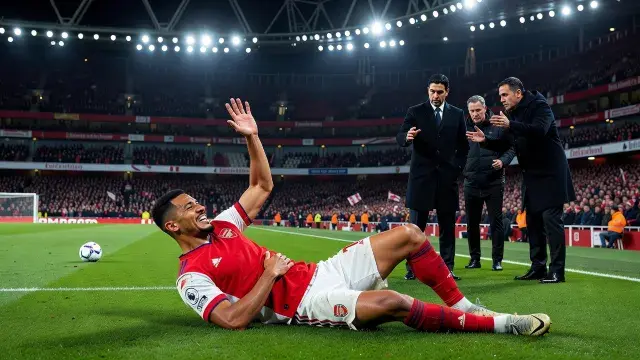
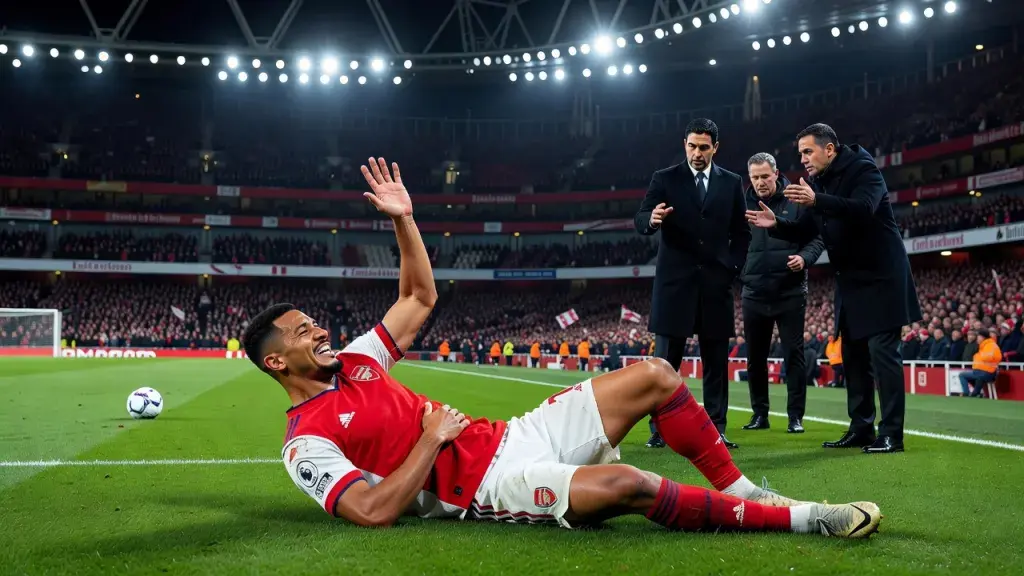
For Arsenal, this summer's World Cup was a constant balancing act. There was pride in 15 of their players featuring at the tournament, juxtaposed by an undercurrent of nervousness surrounding the fitness of many of them. That anxiety reached an apex in France's semi-final loss to Spain, when William Saliba, in possession with nobody near him, dropped to the ground, kicked the ball out of play and signalled to the dugout that he needed treatment.
On Wednesday, Arsenal confirmed Saliba would not undergo surgery on the injury but would instead be out for an "extended period." The club's activity this window has not been confined to defensive reinforcements either, with interest in attacking talent also on the radar - reports linking the club to a rising forward, detailed in this piece on the lisa baum arsenal transfer pursuit, underline how broad Arsenal's summer priorities have become. But the more pressing concern remains at the back, where The Athletic reports Arsenal are actively in the market for a central defender. England's John Stones, who left Manchester City last month when his contract expired, is among the names under consideration, having spent three years working with Mikel Arteta when the Arsenal manager served as Pep Guardiola's assistant at City.
Stones, Konsa, and the value of experience
Stones has long been the Premier League's prototypical ball-playing centre-back, and as recently as 2024-25 Guardiola trusted him as an auxiliary midfielder in possession. That level of comfort on the ball would be welcomed in north London, even if replicated in a different tactical context. Fitness, however, is the obvious caveat - Stones has not completed two-thirds of available league minutes in a season for over eight years, though arriving as a free agent and a Champions League winner gives him an appeal that recent City imports Gabriel Jesus and Oleksandr Zinchenko did not carry in 2022.
Aston Villa's Ezri Konsa offers positional flexibility across central defence and right-back, qualities Dean Smith once praised for their calmness on the ball and strength in one-on-one duels. Yet the valuation gap between the two clubs, combined with questions over whether a player used to featuring in at least 85 per cent of his team's minutes would accept a squad role, makes him a less straightforward fit than his profile might suggest.
Internal solutions and long-term thinking
Cristhian Mosquera's emergence last season, after stepping in for Saliba at Liverpool in August, offers Arteta a cheaper alternative already inside the building. The 22-year-old started 20 games across competitions and showed defensive traits echoing both Saliba and Gabriel. Jurrien Timber and Ben White, both back in training after injury-hit campaigns, can also cover centrally, with White in particular offering a more progressive passing style than Saliba, even if it sits slightly outside Arteta's usual defensive template.
Ultimately, the priority is Saliba's recovery. Back-related issues, as high-performance consultant Daniel Booth has noted, can affect a player's entire physical foundation, and Saliba has dealt with this before. Whether Arsenal look externally or trust their own depth, managing his workload sensibly may prove just as important as any signing this summer.